


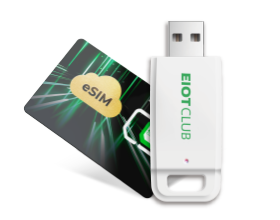














eSIM lets you turn on local or regional data in minutes without swapping plastic. Prices and best-use tactics differ by region—U.S. data tends to cost more per GB, Europe rewards regional bundles and “roam-like-at-home,” and Asia offers strong country plans. 2026 is also a “more-eSIM” year: more devices and carriers are leaning into eSIM, travel eSIM competition keeps improving options, and multi-network profiles (that can use more than one partner network) are getting easier to find.
How Do eSIM Plan Pricing Tiers Differ By Region (USA/Europe/Asia)?
Prices change often, but a few stable patterns help you budget. The table below summarizes common plan types and what usually makes sense per region. These reflect widely observed market patterns and consumer guidance.
| Region | Typical Plan Types | What Usually Works | Notes |
| USA | Pay-as-you-go data, day/week passes, monthly bundles | Buy enough GB up front; avoid streaming on cell; lean on Wi-Fi | Average cost per GB in the U.S. trends high compared with many countries, with recent benchmarks putting it around US$6 per GB vs. a global average near US$2.6. Tourist eSIMs commonly run about US$15–35 for 10GB over 30 days (roughly US$1.5–3/GB) depending on provider and speed caps. |
| Europe | Monthly bundles, regional multi-country packs, roam-like-at-home | Use EU-wide/EEA bundles if crossing borders; choose a local plan if you’ll stay put | “Roam Like At Home” removes retail roaming surcharges within the EU/EEA under fair-use rules. Typical travel eSIMs are around US$15–22 for 10GB/30 days (≈US$1.5–2.2/GB) from major providers, and many domestic offers sit below US$2/GB in price-comparison studies. |
| Asia | Country tourist plans, regional Asia packs | For single-country stays, buy a local eSIM for best speed/price; use regional packs when hopping countries | Prices vary widely by destination; for example, China often averages about US$0.20–0.30 per GB, while Japan and South Korea can be US$3–5+ per GB. Many single-country tourist eSIMs price 10GB packages in roughly the US$8–20 range, and regional Asia passes typically start around US$5–8 for a week of light data. |
In 2026, eSIM adoption is being pushed by more eSIM-only devices in more markets and by China’s operators running smartphone eSIM trials, which can change what “local plan” even means in parts of Asia over time.
Europe’s regulation keeps intra-EEA roaming consumer-friendly (with fair-use checks), while the U.S. market often shows higher per-GB averages in global comparisons. Asia offers excellent single-country tourist plans, but they vary by destination.
Match plan type to route. U.S. = budget tightly; Europe = consider regional bundles; Asia = buy local when staying put.
Which eSIM Data Usage Strategies Work Best Across Regions?
Choosing the plan is half the job. The other half is how you use data day-to-day, so you don’t blow the cap. A 2026 reality: faster networks and more “always-on” apps can quietly raise background usage, so your settings matter more than the sticker price.
USA Strategy: Higher Per-GB Costs
- High-Cost Per GB Reality
Expect a higher blended cost. Buy a bundle sized for maps/ride-hailing/messaging first, then add video only on Wi-Fi. Historically, the U.S. sits toward the expensive end in per-GB comparisons.
- Carrier Coverage Maps
If your eSIM lets you choose networks, pick the one with better rural/airport coverage along your route (airports and interstates aren’t equal).
- Wi-Fi Offload And Hotspots
Use hotel, café, conference, and airport Wi-Fi. Set auto-downloads for podcasts and streaming to Wi-Fi only.
- Video And Social App Throttling
Cap video at 480p in app settings and mute autoplay. That alone can halve daily usage.
In the U.S., watch background data and treat cellular video as “nice to have” unless you bought a large plan.
Europe Strategy: Seamless Cross-Border With Fair Use
- EU-Wide Bundles
If you’ll cross borders, a regional eSIM simplifies life. One profile, one bill, continuous data.
- Cross-Border Roam-Like-Home
Within the EU/EEA (plus Iceland, Liechtenstein, Norway), retail roaming surcharges are banned for periodic travel. Providers may apply fair-use checks if you roam more than you’re “at home” over roughly four months.
- Train And Airport Wi-Fi Use
Rail hubs and airports often have decent Wi-Fi—perfect moments to sync photos and maps.
- Map And Media Pre-Download
Pre-download city packs in Google Maps/Apple Maps and pull transit passes before you depart.
Europe rewards cross-border planning. Use a regional pack and mind fair-use—don’t treat roaming as a permanent home plan.
Asia Strategy: Single-Country Value
- Country-Specific Tourist Plans
For Japan, Thailand, Singapore, and others, country eSIMs often deliver the best speed/price combo for stays of a week or more.
- Regional Asia Packs
If you’re bouncing across multiple hubs (Tokyo–Seoul–Taipei), a regional pack can reduce swaps. Expect varying speeds and fair-use rules.
- Fair-Use And Speed Caps
Tourist plans may include “unlimited” with speed caps after a daily threshold. Read the FUP to avoid surprises.
- Translation And Map Caching
Cache languages and maps over hotel Wi-Fi; your live data then covers messages and ride-hailing.
For 2026: Asia “local eSIM” convenience can shift quickly as more carriers enable consumer eSIM flows; in places where smartphone eSIM is still rolling out, having a reputable travel eSIM as a backup can save a day of setup time.
In Asia, go local for single-country trips; use a regional eSIM only when border-hopping.
FAQ
Q1. Can I Use eSIM to Separate Work And Personal While I Travel?
Yes. Load a work eSIM for data/calls during business hours and keep your personal number for family. On iPhone and Android, you can label lines, set the work profile as the default for calls/messages Monday–Friday, and switch data back to personal on weekends. For expenses, screenshots of the data-line usage page and invoices make reimbursements easier. Mobile-device-management tools can also push and lock the work eSIM if your company requires that.
Q2. How Do I Stay Within Fair-Use Rules In Europe With An eSIM?
Think “periodic travel,” not living abroad. Connect to your home network periodically if you’re an EU resident, and avoid using a roaming plan more abroad than at home over a multi-month window. If your operator flags misuse, they can warn you and later apply a small surcharge. Keep boarding passes or itineraries handy if you need to show travel patterns.
Q3. Where Can I Check Realistic Price Benchmarks Before I Buy?
For a quick sense of relative costs, review global studies comparing the average cost of 1 GB by country, then sanity-check your eSIM quotes against those ranges. These reports aren’t your exact trip price, but they show if a quote is way off. In recent years, the U.S. has tested high per-GB averages, while many European countries and parts of Asia have test lower.
Q4. What Should I Look For When Choosing an eSIM Plan?
Start with coverage and compatibility. Check which local networks the eSIM uses and whether your phone supports their bands and 5G/4G. Then compare data allowance, validity period, and whether hotspot/tethering is allowed. Look for clear fair-use policies on “unlimited” plans, refund rules if activation fails, and easy top-up options inside the app. If you rely on calls, check for voice/SMS or Wi-Fi calling support. Finally, scan recent reviews for speed and reliability—cheap data isn’t helpful if it crawls or drops constantly.
Q5. Why Might a Global or Regional eSIM Save Money Compared With Local Plans?
If you’re hitting several countries in one trip, a global or regional eSIM can cut hidden costs: you avoid multiple activation fees, leftover balances on each local SIM, and time spent switching profiles at every border. One larger regional bundle also lets you pool data across stops instead of overbuying per country “just in case.” Per-GB pricing may be slightly higher than the very best local deal, but for short stays and multi-country itineraries, the total trip cost—and hassle—often ends up lower.
Conclusion
Choose a plan by route: a regional bundle in Europe, a country plan in Asia, and careful GB budgeting in the U.S. Preload profiles, label them clearly, and turn on data-saver rules before you fly. With the right eSIM and a few smart settings, you’ll land, scan, and get online—without bill shock.