



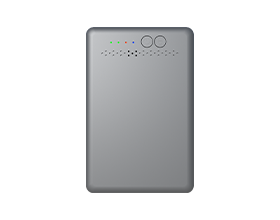












In many retail, hospitality, and field-service environments, checkout no longer happens at a fixed counter. Mobile POS systems are now used in pop-up stores, food trucks, warehouses, events, and curbside operations. Mobile Point of Sale (mPOS) has revolutionized how we shop.
As businesses rely more on cellular connectivity, they also face a new operational risk: dependence on a single mobile carrier. If your mPOS relies on one network and that network goes down, your business stops. This is why multi-carrier connectivity isn't just a luxury—it’s the future of retail.
The High Cost of the "Dead Zone"
Traditional SIM cards are locked to a single provider. In a static office, that might work. But for a mobile business, it’s a gamble. A "dead zone" in a corner of a convention center or a network outage during a local festival can result in:
- Lost Revenue: Every declined transaction is a lost sale.
- Customer Friction: Long wait times lead to abandoned carts.
- Data Deserts: Without a connection, your inventory and CRM data can't sync, leading to accounting nightmares.
3 Reasons Multi-carrier Connectivity is Dominating mPOS
1. Intelligent Network Switching (The "Never-Offline" Guarantee)
Multi-carrier SIMs, like those provided by EIOTCLUB, don't just stay on one network. They are programmed to "sniff out" the strongest available signal. In the U.S., this can allow a device to move between major carrier networks when signal quality changes.
SEO Tip: This feature is often called "Carrier Agnostic Connectivity," and it is the gold standard for mission-critical payment processing.
2. High-Availability Connectivity for Enterprise Hardware
Enterprise-grade terminals, such as the Toshiba TCx® 810 and specialized handheld scanners, require mission-critical stability to run retail ecosystems like TCx® Sky. Multi-carrier redundancy reduces single points of failure and helps maintain the stable, low-latency connection needed for secure payments and real-time cloud sync.
3. Simplified Global Scalability
For POS vendors looking to expand internationally, managing 50 different contracts with 50 different local carriers is an operational disaster. A global multi-carrier SIM allows you to ship one SKU of your device anywhere in the world—from London to Tokyo—and have it connect to the best local network the moment it’s powered on.
Beyond Reliability: The Financial Edge
Many businesses hesitate to switch because they fear high costs. However, the future of mPOS connectivity is built on Pay-As-You-Go and Standby Mode models.
- No More "Siloed" Data: Instead of paying for five different data plans for five different devices, a unified multi-carrier platform allows you to manage your entire fleet under one data pool.
- Zero-Waste Billing: You only pay for the kilobytes used during transactions. During the off-season, your costs drop automatically without the need to cancel contracts.
Elevate Your mPOS Strategy with EIOTCLUB
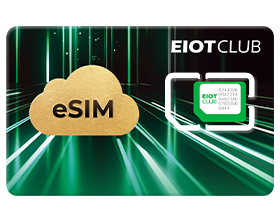
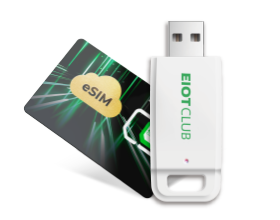
The future of retail is mobile, but mobility requires a safety net. By equipping your mPOS devices with EIOTCLUB’s Multi-network POS SIM cards, you are protecting your bottom line against the unpredictability of cellular infrastructure.
Whether you are running a fleet of Toshiba POS terminals or a single mobile card reader, our "Triple-Net" switching technology ensures you never miss a sale due to a "No Service" icon.
Ready to future-proof your payments?
EIOTCLUB Professional POS SIM Card: Triple-Network Connectivity for Reliable Payments today and experience the power of redundant, high-speed IoT connectivity.